Gothic cathedral tattoos
A gothic cathedral tattoo puts eight centuries of stone on skin: pointed arches, rose windows, flying buttresses and spires. It is the most technically demanding gothic motif, and the one that most clearly shows where the word gothic began.
70 designs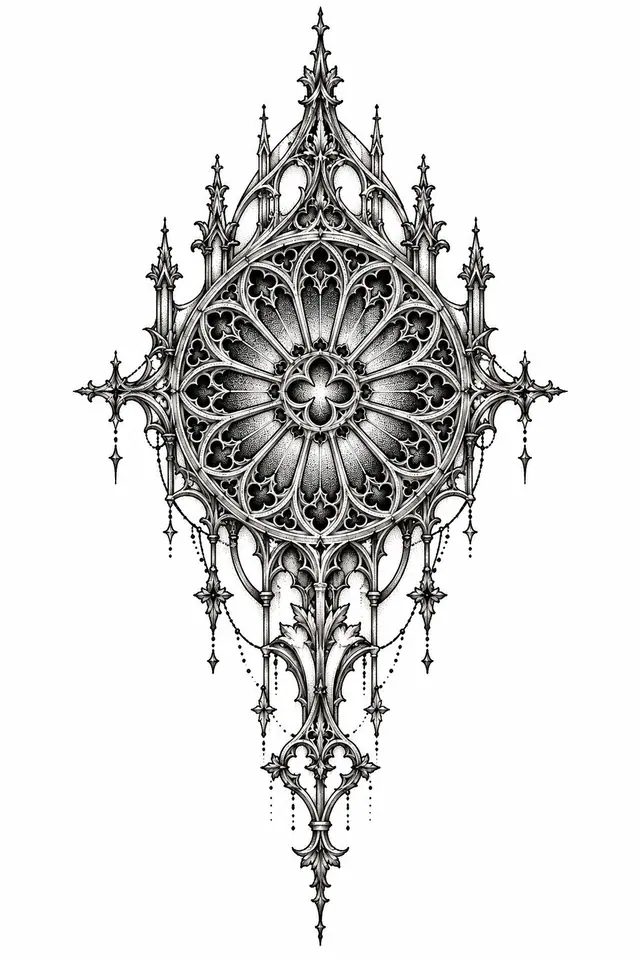
Why gothic architecture works as a tattoo
Gothic architecture is where the word gothic comes from, long before it meant novels, music or black eyeliner. A cathedral tattoo goes back to that source. It also gives a tattoo something rare: structure. Arches, windows and spires are built for vertical space, and the human body is mostly vertical space. A pointed arch frames another motif. A spire follows the spine. A rose window sits on a shoulder like a mandala.
The catch is that buildings are made of straight lines and exact geometry, and skin is neither straight nor flat. That makes cathedral pieces the most demanding motif in gothic tattooing. Choose your artist for their linework first.
A short history of the Gothic cathedral
Saint-Denis, 1140s. Abbot Suger rebuilt the choir of the Abbey of Saint-Denis, just north of Paris, and the result is usually counted as the first Gothic building. The new system combined pointed arches, ribbed vaults and external supports, which let walls become thinner and windows much larger. Suger wrote about the light pouring through the new stained glass as something close to divine.
The great cathedrals. Notre-Dame de Paris was begun in 1163. Chartres was largely rebuilt after a fire in 1194 and still has most of its medieval stained glass. Cologne Cathedral was begun in 1248 and not finished until 1880. That gap of more than six centuries is the clearest proof of how long these buildings took.
The insult. Italian Renaissance writers, Giorgio Vasari among them, called the style the work of the Goths, meaning crude and barbaric next to Roman classicism. The name stuck and lost its sting.
Ruins. In England, Henry VIII’s Dissolution of the Monasteries in the 1530s left hundreds of abbeys stripped and roofless. Ruined abbeys like Whitby, Tintern and Fountains became favorite subjects of Romantic painters and poets. Whitby Abbey has a special place in gothic culture: Bram Stoker set part of Dracula in Whitby, and the town has hosted a goth festival since 1994.
Revival. Horace Walpole turned his house at Strawberry Hill into a Gothic fantasy from the 1740s, then wrote The Castle of Otranto in 1764, the first Gothic novel. Gothic architecture and Gothic fiction share a parent. In the 19th century the Gothic Revival spread across churches, universities, railway stations and the rebuilt Palace of Westminster.
Notre-Dame today. The 2019 fire that destroyed Notre-Dame’s roof and spire reminded the world how fragile these buildings are. The restored cathedral reopened in December 2024. Our history of gothic tattoos connects the architecture to the later meanings of gothic.
What a cathedral tattoo means today
Most people choose a gothic architecture tattoo for one of these reasons:
- Faith, expressed through the building rather than a symbol.
- Endurance. Stone that has stood for eight hundred years, or a ruin that stands without a roof.
- Patience and craft. Many cathedrals took longer to finish than any of their builders lived.
- A place. Your city’s cathedral, a church from your family’s country, a ruin you visited.
- Atmosphere. The pointed arch is the strongest single sign of gothic, with no religious statement attached.
Architecture terms to know before you book
| Term | What it is | How it works in a tattoo |
|---|---|---|
| Pointed arch | The defining Gothic shape | A frame for another motif, or a window on its own |
| Tracery | Stone ribs dividing a window | Fine linework; needs size to stay open |
| Rose window | A large round window with radiating tracery | A circular design for the shoulder, knee or elbow |
| Ribbed vault | Crossing stone ribs on a ceiling | Strong perspective in interior views |
| Flying buttress | An external arch bracing the wall | Repeating diagonals, dramatic in perspective |
| Spire | A tall pointed tower top | Follows the spine or the length of the forearm |
Knowing these words helps you tell an artist exactly what you want.
Gothic cathedral tattoo ideas from the gallery
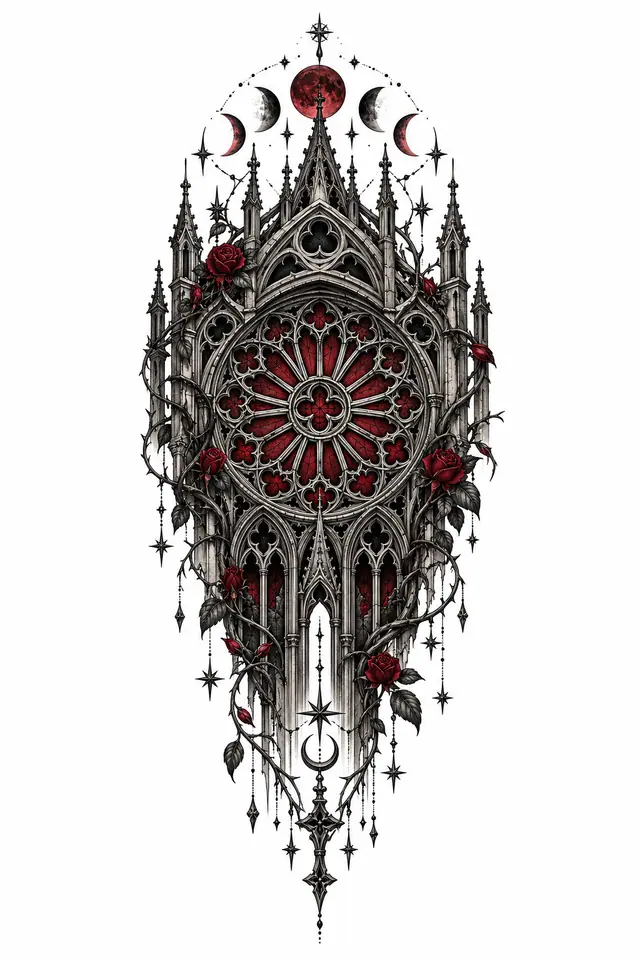
- Facade with twin spires and a rose window. The full portrait of a cathedral, at home on the back or thigh.
- Single pointed arch window with tracery. The most versatile idea; works alone or as a frame for a gargoyle, a figure or a skull.
- Rose window with radiating tracery. Circular and symmetrical, like an architectural mandala.
- Spire rising into a crescent moon. Tall and narrow, ideal for the spine or forearm.
- Flying buttresses in perspective. Dramatic, with repeating diagonals that suit the upper arm.
- Interior with ribbed vaults. The classic backdrop for a gothic sleeve, with arches framing other motifs.
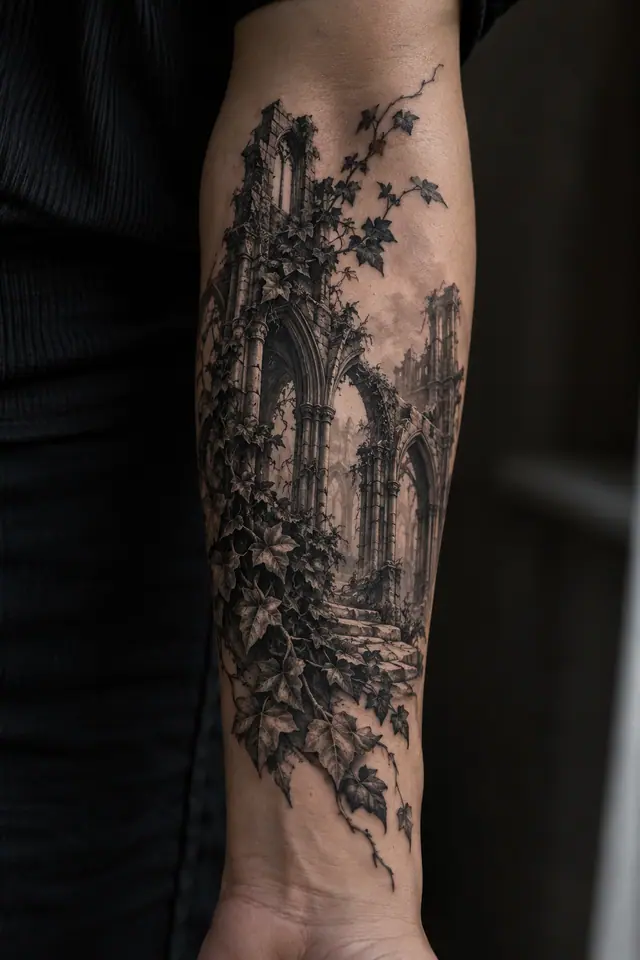
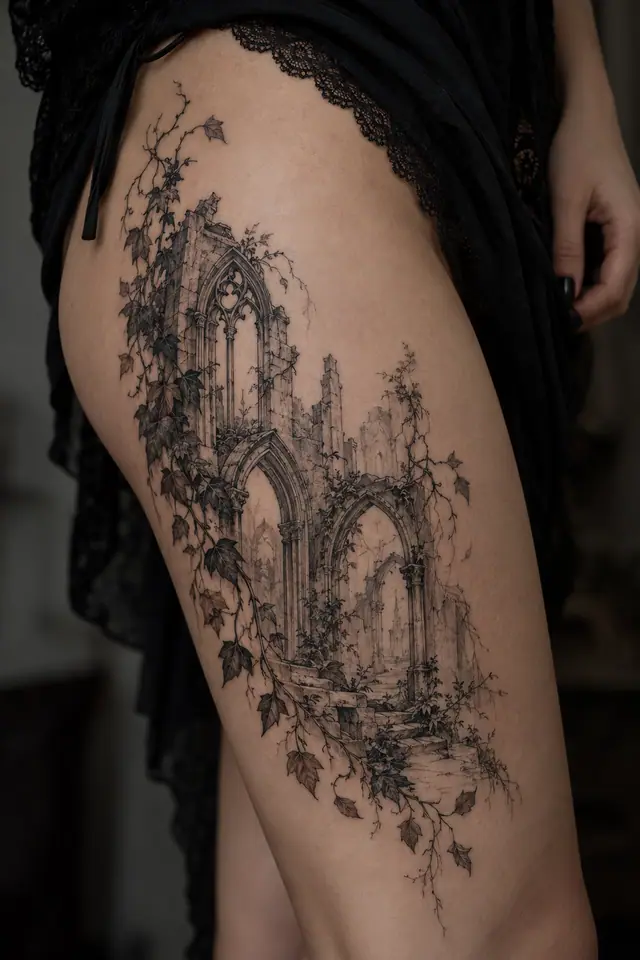
- Ruined abbey with broken arches and ivy. Romantic, weathered and forgiving, since ruins don’t need perfect lines.
- Stained glass window with a skull at its center. Lead lines become bold outlines, the glass becomes shading or color.
Straight lines on a curved body
Every tattoo artist who does architecture deals with the same problem: a perfectly drawn facade can look bent once it wraps around a forearm or ribcage. Three habits help:
- Follow the long axis. Put vertical buildings on vertical areas: spine, outer forearm, calf, outer thigh.
- Stencil in your natural pose. Stand relaxed with arms down while the stencil goes on, then check it in a mirror.
- Prefer ruins for curved areas. A ruined abbey, ivy-covered, hides small distortions that would ruin a crisp facade.
Styles that suit a cathedral
Black and grey is the default for stone and light: deep shadow inside arches, soft glow through windows. Etching looks like 19th-century architectural engravings and is excellent for facades, since crosshatching describes stone texture with lines that last. See our etching designs. Blackwork turns spires and arches into bold silhouettes against a moon. Dotwork gives the grainy texture of weathered stone. Neo-traditional suits stained glass, with burgundy, plum and antique gold in the panes. Fine-line works only for single windows and simple spires, not for full facades.
Placement, size and time
A single arch window works at about 3 inches tall and a rose window at about 3 inches across. A facade needs 6 to 8 inches minimum, and an interior view is really a back piece or half sleeve. Large architecture is slow work, often spread over several sessions, and most experienced artists charge by the hour for it. Our cost, pain and aftercare guide has realistic ranges.
Using the prompts
The cathedrals in our gallery are AI concepts, each shown with its ChatGPT prompt. Copy one and change the spire, the moon or the style to explore variations. Expect your artist to redraw it with a ruler: AI architecture often has arches that don’t line up, tracery that goes nowhere and towers of slightly different heights, all things your eye will catch later on skin.
Cathedral tattoo designs
Questions people ask
What does a gothic cathedral tattoo mean?
Common readings include faith, endurance and permanence, since these buildings have stood for centuries, and patience, since many took generations to finish. Others choose a specific cathedral for a city or heritage they love, or simply for the beauty of Gothic architecture.
What is a gothic architecture tattoo?
It is any tattoo built from elements of Gothic buildings: pointed arches, tracery windows, rose windows, ribbed vaults, flying buttresses, spires and gargoyles. It can be a full cathedral facade, a single window used as a frame, or architectural details woven through a sleeve.
Why is it called Gothic architecture?
The name began as an insult. Italian Renaissance writers such as Giorgio Vasari blamed the style on the Goths, the tribes who sacked Rome, to mark it as barbaric compared with classical architecture. The builders themselves called it the French style or simply the modern style.
How big should a cathedral tattoo be?
A single arched window can work at about 3 inches tall and a rose window at about 3 inches across. A full facade with towers and a rose window needs at least 6 to 8 inches, and an interior view with vaults usually needs a back piece or half sleeve.
Can a cathedral tattoo be done in one session?
A small window or rose window usually can. A detailed facade or interior often needs two or more sessions because of the amount of straight linework and shading, and a full back piece can take many. Expect to pay by the hour for larger architecture.
Related motifs
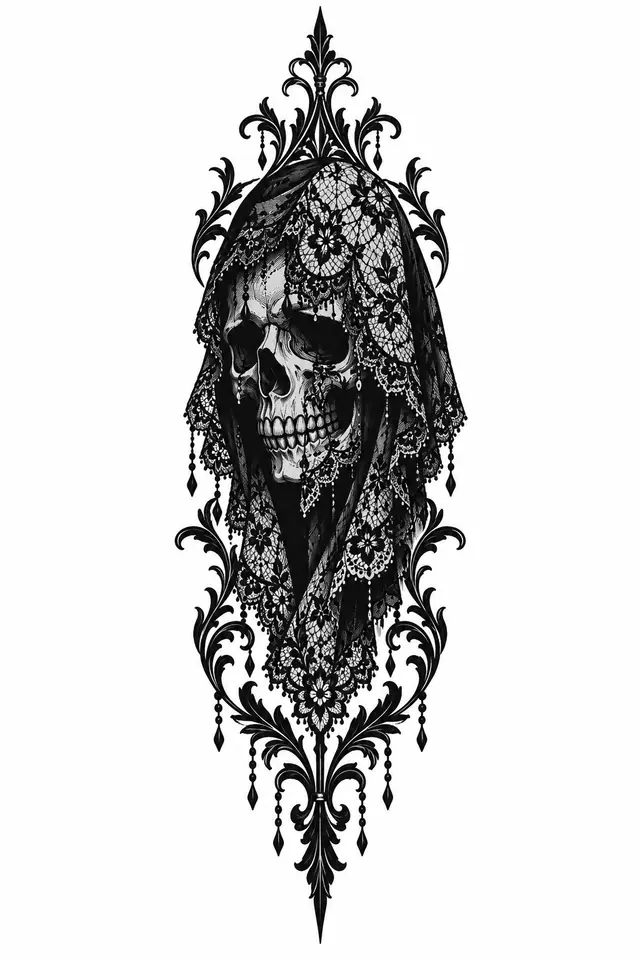 SkullMortality worn openly: the oldest reminder that life is short.
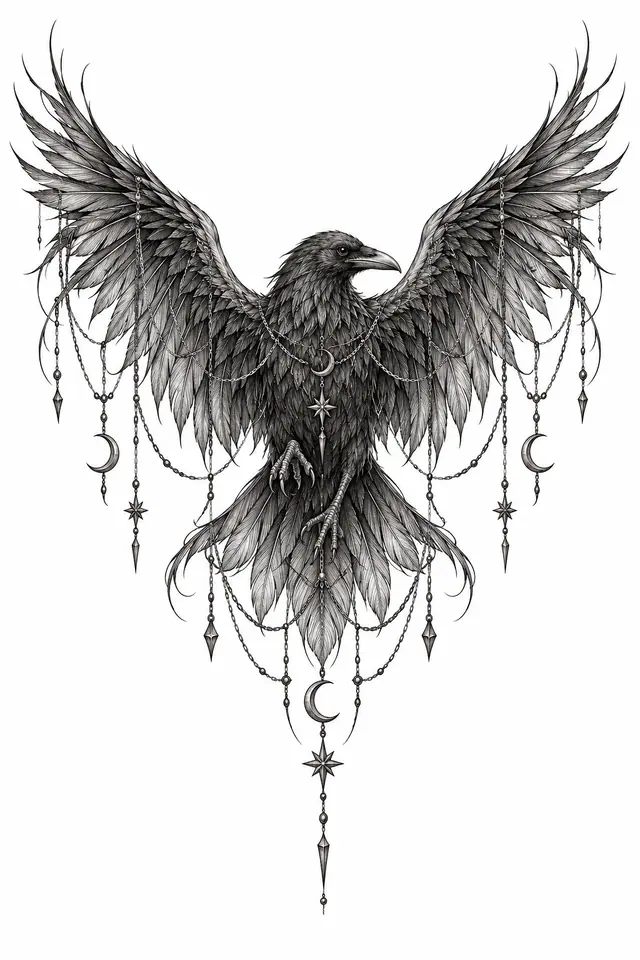 Raven and crowPoe's messenger, read as omen, memory and intelligence.
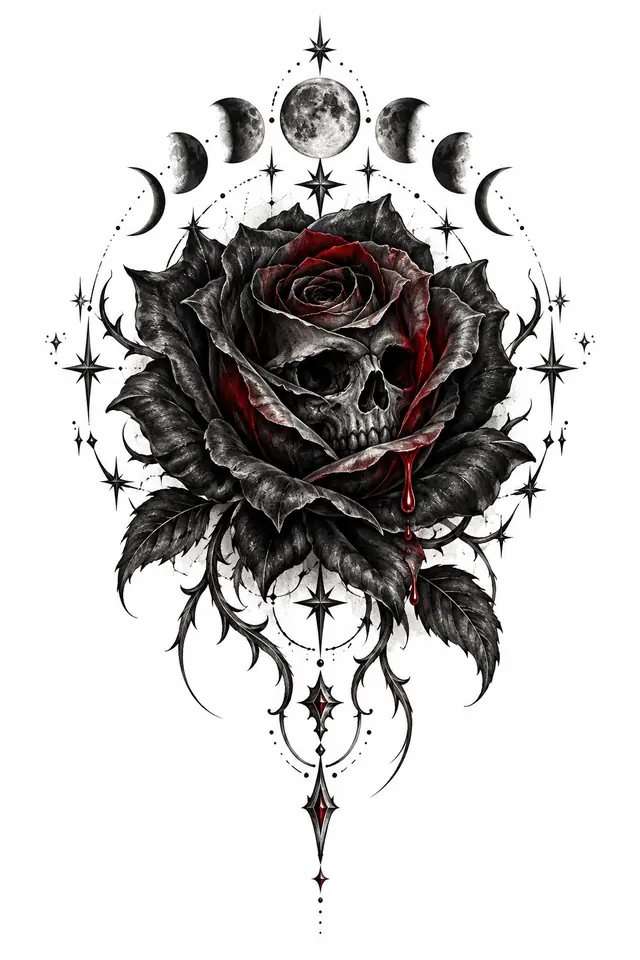 Black roseLove that outlives loss, grief and farewells.
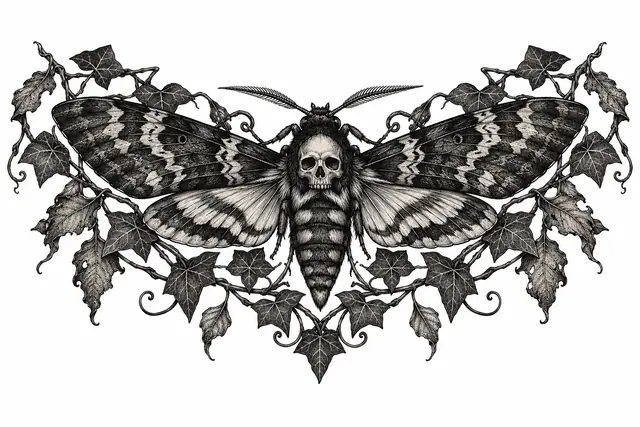 MothDrawn to the flame: transformation, night and the soul.
 BatCreature of the night, linked with rebirth and Dracula.
 Gothic crossFaith in stone and thorns, from churchyards to chains.
 GargoyleStone guardians that kept rain and evil off the roof.
 VampireRomance and hunger, from Victorian novels to now.
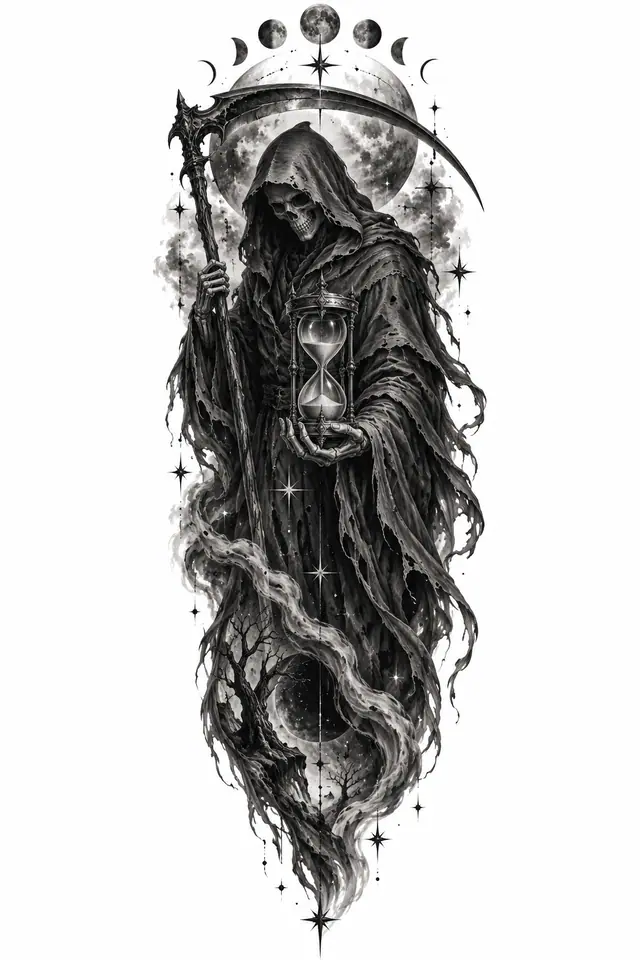 Grim reaperDeath personified, a reminder rather than a threat.