Gargoyle tattoos
A gargoyle tattoo is a guardian with a day job. Real gargoyles are carved rainwater spouts, and the brooding winged figures most people picture are usually grotesques, many of them carved in the 1800s rather than the Middle Ages.
45 designs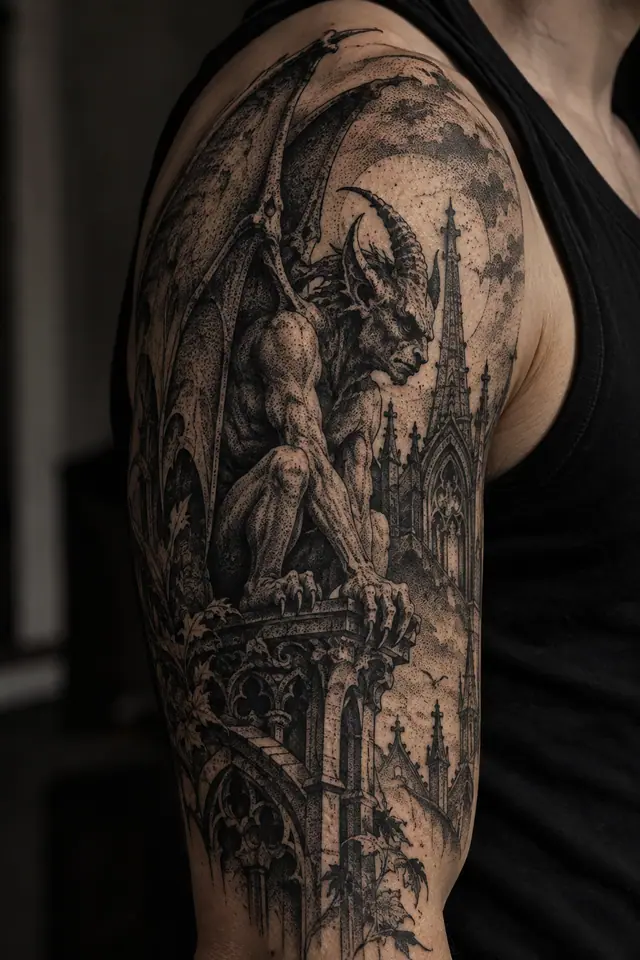
Gargoyle, grotesque or chimera
The word gargoyle comes from the French gargouille, related to the word for throat, and it shares a root with gargle. That is the clue to what a gargoyle is: a throat for rainwater. A channel runs along the creature’s back, and water from the roof gutters pours out of its mouth, well away from the wall. Stone and mortar last much longer when rain doesn’t run down their face.
Strictly speaking, a carved figure that doesn’t drain water is a grotesque. When it combines parts of different animals, wings of one, head of another, it is often called a chimera. Most gargoyle tattoos actually show grotesques. That doesn’t matter on skin, but knowing the difference lets you choose: an open-mouthed waterspout head is a true gargoyle, a crouching winged watcher is a grotesque.
Where gargoyles come from
Ancient spouts. Carved waterspouts are much older than Gothic churches. Greek temples used lion-head spouts along their roof edges.
Gothic invention. Gothic builders, from the 12th century on, made the spouts larger, more numerous and much stranger: dogs, lions, monkeys, monks, demons, hybrids. Not everyone approved of this kind of carving. In the 1120s the abbot Bernard of Clairvaux complained about the monsters carved in monastery cloisters, asking what such ridiculous creatures were doing in front of monks at their reading. Fantastic carving was already controversial in its own time.
Legend. In Rouen, a legend tells of La Gargouille, a dragon defeated by the city’s bishop, Saint Romanus, whose head was then mounted on a church wall. It is a story, not history, but it shows how early the word and the monster were tied together.
Viollet-le-Duc’s chimeras. Victor Hugo’s novel The Hunchback of Notre-Dame, published in 1831, helped turn public attention to the neglected cathedral. The restoration that followed, led by architect Eugene Viollet-le-Duc, added the gallery of chimeras that now looks out over Paris, including the famous horned creature resting its chin in its hands. These are the figures most gargoyle tattoos quote, and they date from the 19th century.
Modern grotesques. Cathedrals still add new ones. Washington National Cathedral has a Darth Vader grotesque, designed by a child in a competition in the 1980s. The animated series Gargoyles, which began in 1994, gave a generation the idea of gargoyles as protectors who come to life at night.
There is also a long tradition of medieval humor in this carving. Some gargoyles pull faces, stick out tongues or show their backsides to the town, and Freiburg Minster in Germany has a well-known example.
What a gargoyle tattoo means today
Today the gargoyle tattoo meaning most people reach for is protection. The idea of gargoyles frightening evil spirits away from the church is a popular reading, and while medieval builders did not write it down, it fits the way these creatures face outward from the building.
Other modern readings:
- The loyal outsider. Something that looks monstrous but does a useful, protective job. Many people relate to that.
- Watching over. A memorial for someone who looked after you.
- Endurance. Stone that has faced centuries of weather.
- Love of craft. Respect for the anonymous carvers who made them.
Gargoyle tattoo ideas from the gallery
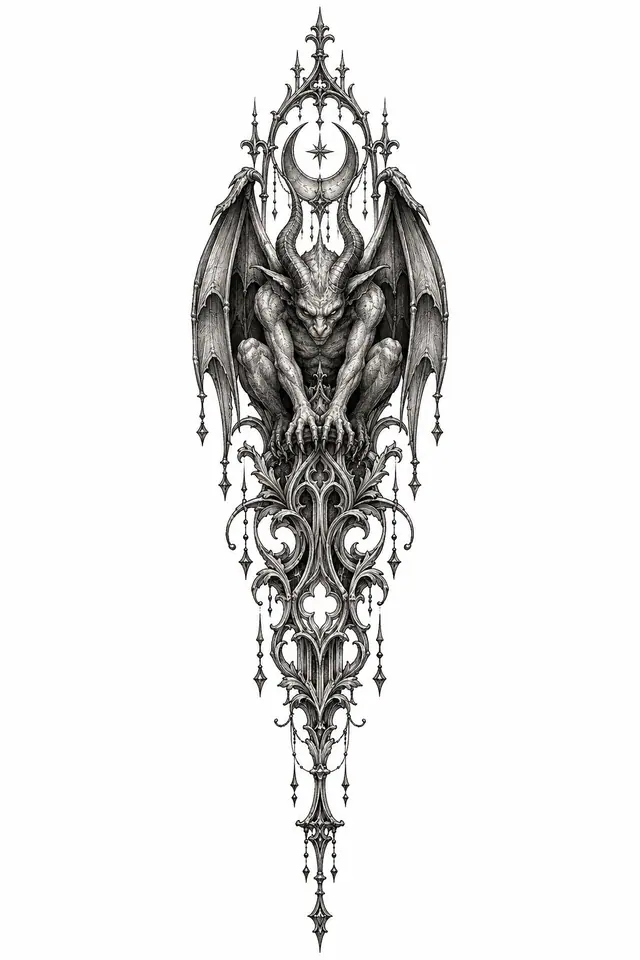
- Crouching gargoyle with folded bat wings. Compact and powerful. The bat wings tie it to the bat motif, following the medieval habit of giving demons bat wings.
- Gargoyle perched on a cathedral ledge. Includes a slice of architecture, which grounds the figure. See the cathedral page for more stonework ideas.
- Screaming waterspout head. The true gargoyle: an open mouth, a long neck, pure expression. Great on the calf or forearm.
- Winged gargoyle with horns and claws. The full monster, best with spread wings across the upper back.
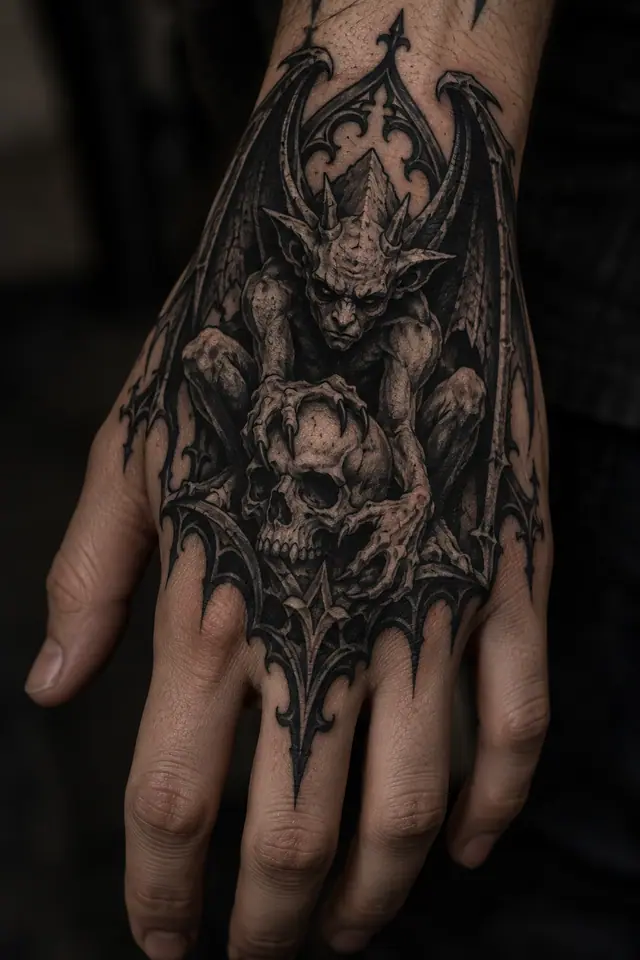
- Gargoyle holding a skull. Guardian and memento mori together. The skull page covers how much size the skull needs.
- Chimera from a Paris rooftop. The Viollet-le-Duc look: a brooding figure leaning on a balustrade, with the city skyline below.
Styles that suit a gargoyle
The gargoyle is a carving, so the style has to suggest stone.
Black and grey realism is the strongest choice. Smooth grey gradients turn into weathered stone with chips, cracks and dark stains from centuries of rain. Look at our black and grey designs for stone texture.
Dotwork gives the grainy, porous surface of limestone, and it ages well because stippling holds its texture. See dotwork designs.
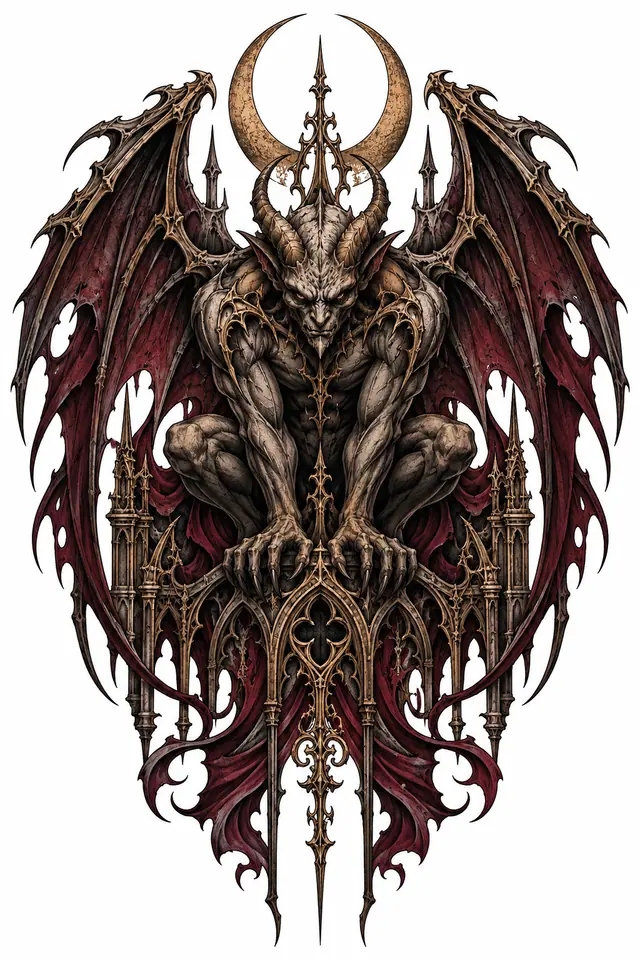
Etching suits a gargoyle drawn like an old architectural print. Blackwork makes a bold silhouette that reads from across a room. Neo-traditional gargoyles in muted burgundy and gold feel more like illustration than stone. A red accent is best spent on a moon, a rose or a drop of blood. Tiny red eyes look striking when fresh, but small specks of color blur and fade first.
Placement and size
- Shoulder cap: 4 to 5 inches. A crouching gargoyle on the shoulder looks like it is perched on the edge of a roof. Our shoulder designs show the rounded compositions that work there.
- Chest: 5 to 6 inches on one pec, or two facing gargoyles across the chest as guardians.
- Outer calf or forearm: 4 to 6 inches tall for a waterspout head or perched gargoyle.
- Upper back: 8 inches or more across for a winged gargoyle with spread wings.
- Knee: a gargoyle face can work over the kneecap, but knees are painful and the skin moves a lot.
Faces carry a gargoyle. Keep the head at least 1.5 to 2 inches tall so the brow, eyes and teeth stay separate. Smaller than that, ask for a simplified, more graphic version. Gargoyles are one of the motifs most often requested in gothic tattoos for men, but nothing about them is gendered.
Using the prompts
Each gargoyle in the gallery is an AI concept, with the ChatGPT prompt shown so you can copy and remix it. Try swapping “bat wings” for “feathered wings” or the style for dotwork. Before you get it inked, a tattoo artist should redraw it so the anatomy is consistent and the composition follows the muscle it sits on.
Gargoyle tattoo designs
Questions people ask
What does a gargoyle tattoo mean?
The most popular modern reading is protection: a fierce figure that watches over you and keeps harm away. People also choose gargoyles as a sign that something frightening on the outside can be loyal and useful, or simply for their love of Gothic architecture. Medieval builders left no record of a single fixed meaning.
What is the difference between a gargoyle and a grotesque?
A gargoyle is a carved waterspout: it has a channel that carries rainwater off the roof and throws it clear of the wall, usually out of its mouth. A grotesque is a carved figure with no drainage role. Fantastic creatures made of several animals are often called chimeras.
Are the Notre-Dame gargoyles medieval?
The cathedral does have gargoyles that drain water, though most of the ones you see today were carved or replaced in the 19th century. Its most famous figures, the chimeras on the upper gallery including the pensive creature known as the Stryge, were designed during Eugene Viollet-le-Duc's 19th-century restoration.
Why did medieval churches have gargoyles?
The practical reason was water. Rain running down stone walls erodes the mortar, so spouts threw it clear. Why builders carved those spouts as monsters, animals and people is debated: suggestions include warding off evil, teaching a moral, or simple humor and craft pride.
Where should a gargoyle tattoo go?
A crouching gargoyle is compact, so it suits the shoulder cap, chest, outer calf or knee. A gargoyle perched on a ledge reads well on the shoulder or upper arm, as if keeping watch. Winged gargoyles with spread wings work across the upper back.
Related motifs
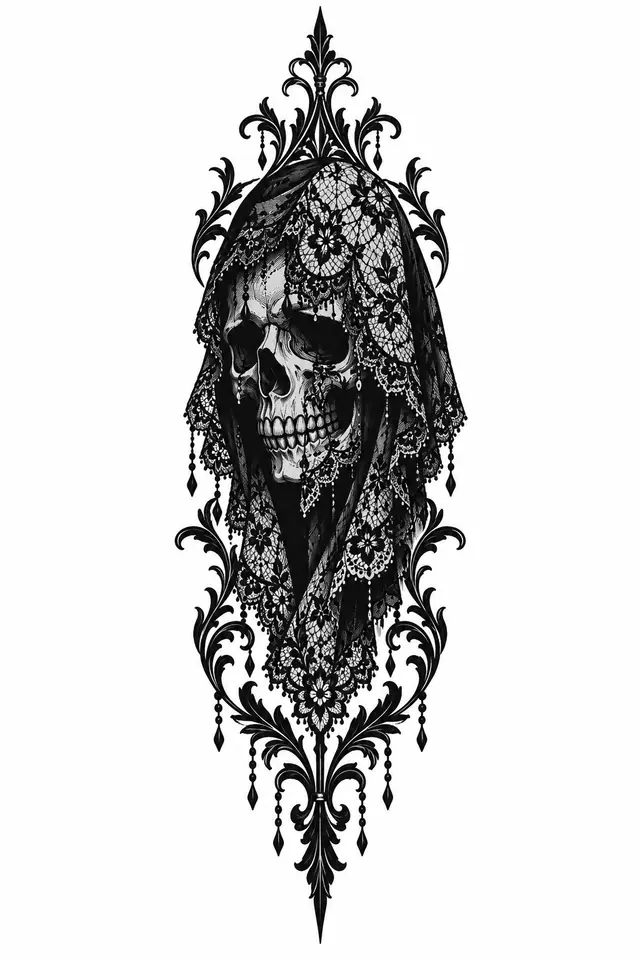 SkullMortality worn openly: the oldest reminder that life is short.
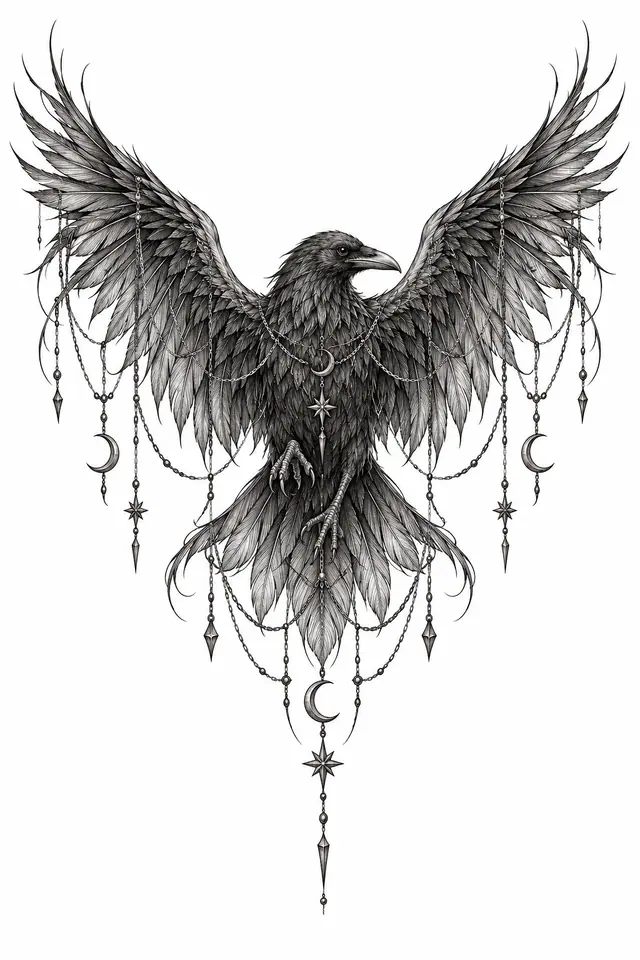 Raven and crowPoe's messenger, read as omen, memory and intelligence.
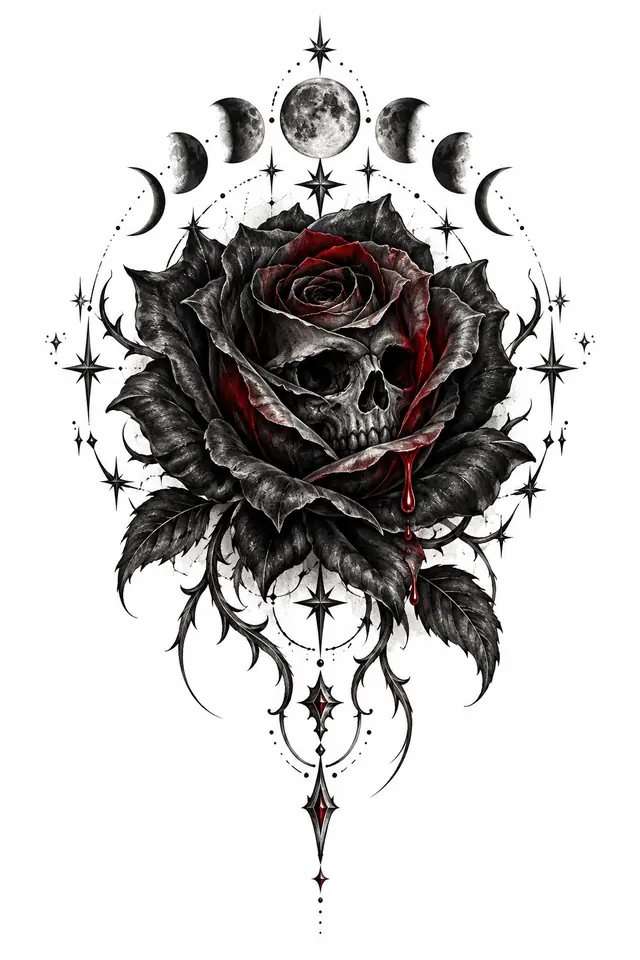 Black roseLove that outlives loss, grief and farewells.
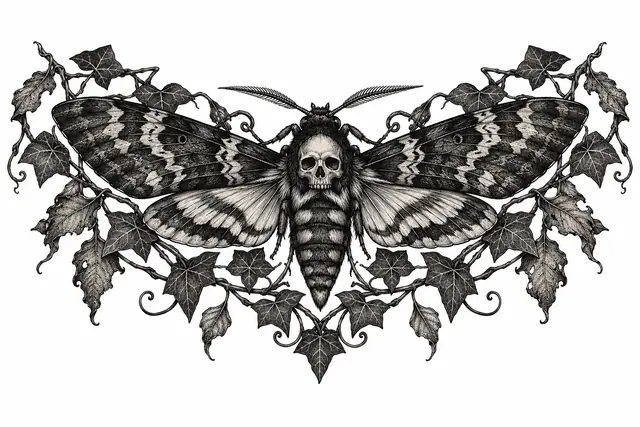 MothDrawn to the flame: transformation, night and the soul.
 BatCreature of the night, linked with rebirth and Dracula.
 Gothic crossFaith in stone and thorns, from churchyards to chains.
 CathedralPointed arches and rose windows from 12th-century France.
 VampireRomance and hunger, from Victorian novels to now.
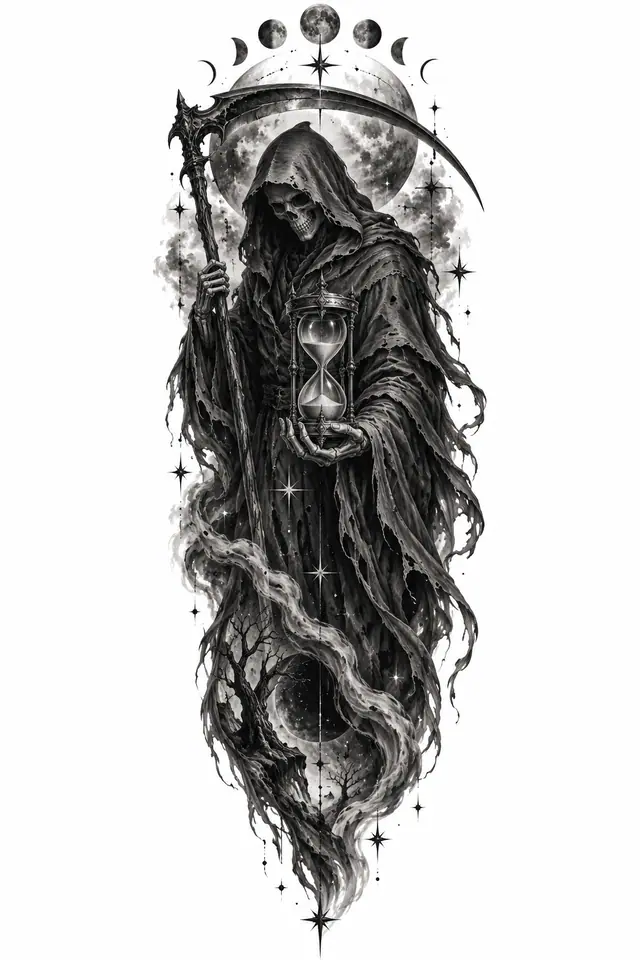 Grim reaperDeath personified, a reminder rather than a threat.