Victorian gothic tattoos
A Victorian gothic tattoo borrows the objects of 19th-century mourning and domestic life: cameos, lockets, skeleton keys, coffins, oil lamps and hand mirrors. Most carry real history, and many were already about death and memory.
45 designs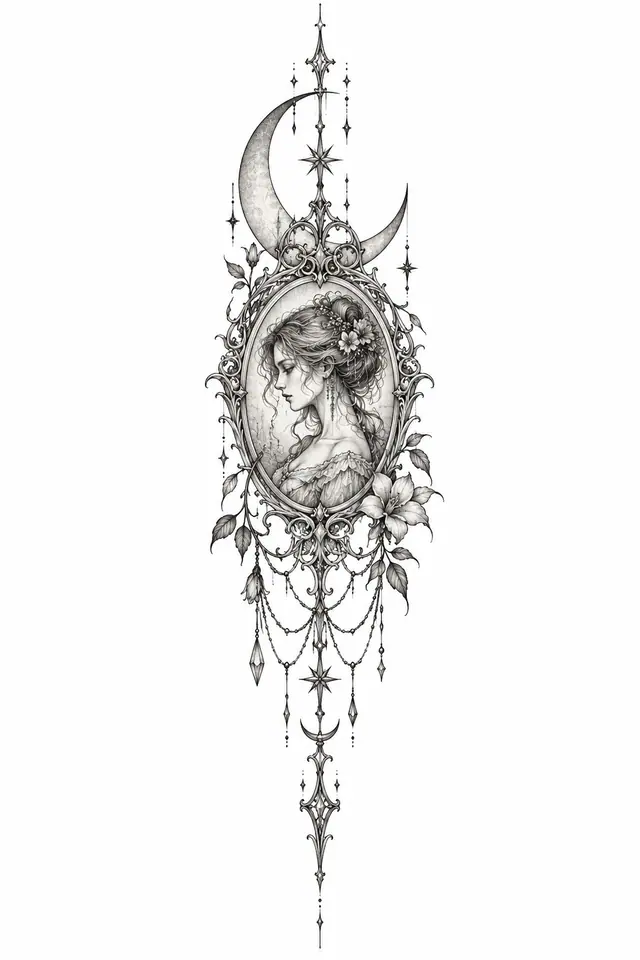
What a Victorian gothic tattoo is
Victorian gothic tattoos draw on the objects of the 19th century rather than on monsters or ruins. The look is antique, ornamental and quietly morbid: a locket that might hold a dead person’s hair, a key to a room no one enters, a coffin with polished handles.
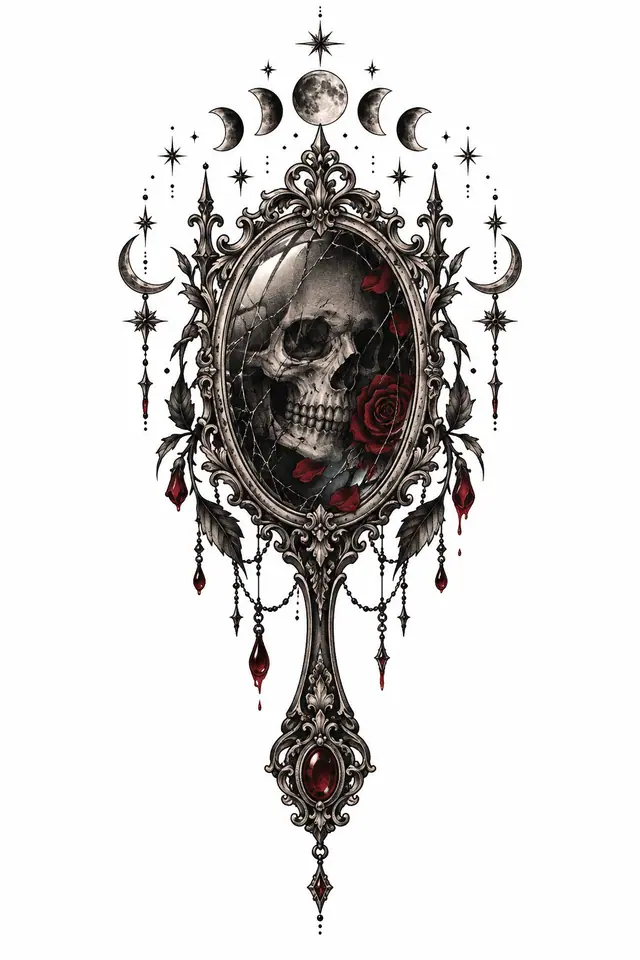
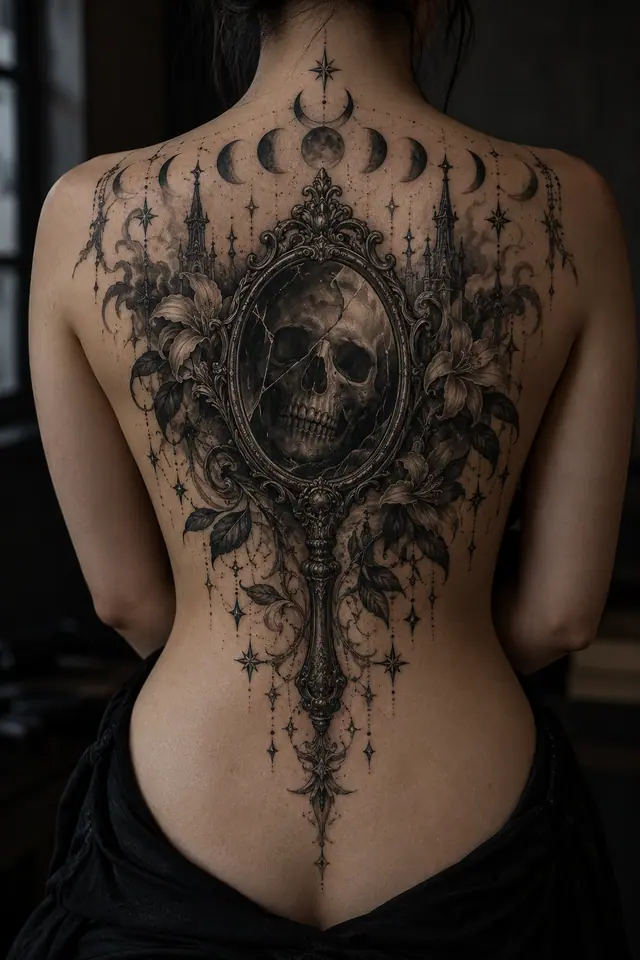
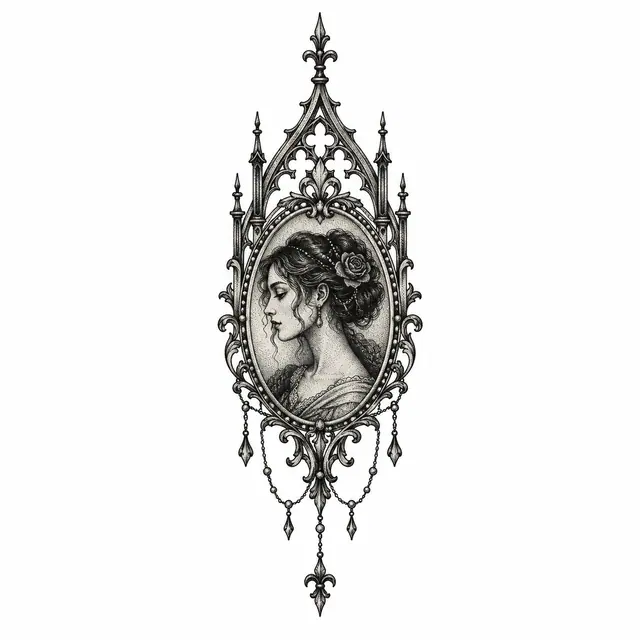
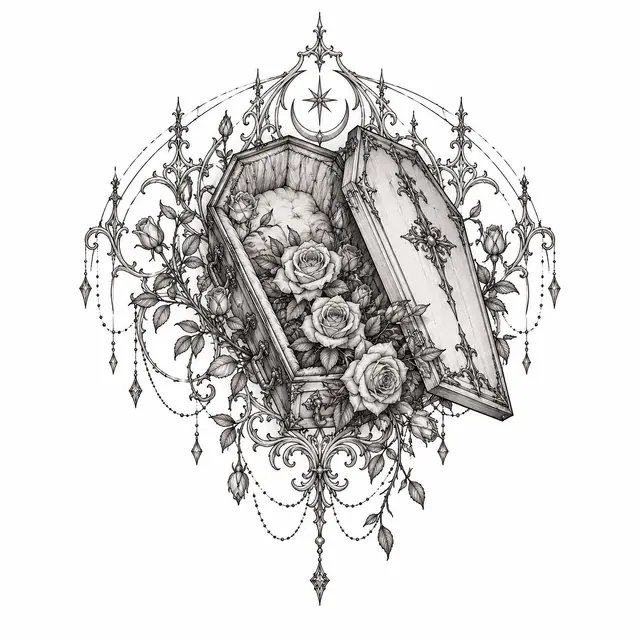
Our gallery focuses on seven of these objects: a Victorian cameo of a woman in profile in an ornate frame, an antique skeleton key with an ornate bow, an open heart-shaped mourning locket, a Victorian coffin with ornamental handles, an antique oil lamp with a flickering flame, a Victorian hand mirror reflecting a skull, and an ornate keyhole and lock plate. The wider Victorian gothic gallery collects these along with lace, vampire designs and etching-style pieces.
The history behind it
Queen Victoria reigned from 1837 to 1901. When her husband, Prince Albert, died in December 1861, she went into deep mourning and wore black for the remaining four decades of her life. Mourning customs already existed, but her example made them stricter and more fashionable across Britain and beyond.
Mourning was worn in stages. Etiquette guides of the time set out deep mourning in dull black fabrics, followed by lighter stages where grey, mauve and some trimmings were allowed. The rules for how long varied with the relationship to the dead, and widows mourned longest.
Jewelry was central to this culture:
- Jet, a black fossilized wood mined and carved around Whitby in Yorkshire, became the fashionable mourning stone. Demand for Whitby jet boomed in the decades after 1861.
- Hairwork used the hair of the dead, either sealed behind glass in lockets and brooches or woven into bracelets and watch chains.
- Lockets held hair, a miniature portrait, or later a photograph.
- Mourning rings carried names, dates and sometimes skulls, continuing a much older memento mori tradition.
Cameos were also hugely popular, though not specifically for mourning. Carved in shell, coral, stone or even lava from Vesuvius, they were bought as souvenirs by travelers to Italy and worn as everyday jewelry.
The period also gave gothic culture some of its key texts, including Robert Louis Stevenson’s Strange Case of Dr Jekyll and Mr Hyde (1886) and Bram Stoker’s Dracula (1897), and filled cities with Gothic Revival churches and public buildings.
One correction worth making: Victorian post-mortem photography was real, but many viral “standing corpse” photos shared online actually show living sitters. The posing stands visible in some of them were mainly used to hold living sitters still during long exposures, not to prop up the dead.
What each object means today
| Object | Historical role | Common modern reading |
|---|---|---|
| Mourning locket | Held hair or a portrait of the dead | Memorial, keeping someone close |
| Cameo | Portrait jewelry, travel souvenir | Honoring a woman in the family, elegance |
| Skeleton key | Key that opens many locks | Freedom, secrets, access, love |
| Keyhole and lock plate | Ornamental door hardware | Privacy, mystery, a secret kept |
| Coffin | Center of the elaborate Victorian funeral | Death, morbid humor, an ending |
| Oil lamp | Light in the home before electricity | Guidance, knowledge, a life burning |
| Hand mirror with skull | Vanity piece | Vanity and mortality |
The mirror reflecting a skull has a famous relative: Charles Allan Gilbert’s 1892 illusion drawing All Is Vanity, in which a woman at her dressing table and her reflection form the shape of a skull when seen from a distance. It is a direct descendant of the vanitas tradition behind memento mori tattoos.
Popular designs and combinations
The cameo works best inside a frame of scrolls or lace and filigree. A real family cameo can be copied, which turns a generic antique into a portrait of your own history.
The skeleton key is long and narrow, so it fits the forearm, the spine, the side of the calf or the outer ankle. A matching keyhole on a partner is the classic pairing.
The open locket gives you a frame inside a frame. Put initials, a date, a small portrait or a lock of drawn hair inside. Initials and dates in blackletter can be tested in our Gothic lettering generator.
The coffin can be grim or playful. Victorian coffin furniture, the ornate handles and name plates, makes it read as antique rather than cartoonish. Roses inside the lid tie it to vampire designs.
The oil lamp suits a fine-line or etching treatment, with the glass chimney left mostly as bare skin and a small flame.
The mirror with a skull is a strong concept for anyone who wants a memento mori that doesn’t look like a skull at first glance.
Styles that suit it
Etching is the most authentic choice. Victorian books, catalogs and newspapers were illustrated with wood and steel engravings, and crosshatched linework instantly reads as 19th century. See our etching designs.
Black and grey suits polished jet, glass and silver, which all depend on sharp highlights against deep shadow.
Neo-traditional with a muted palette of black, burgundy, plum and antique gold matches Victorian interiors and gives cameos and lockets a warm, jewel-like finish. Browse our neo-traditional gallery.
Fine-line works for keys, lamps and small lockets, less so for detailed cameos.
Red accent can mark a red velvet coffin lining or a single garnet in a locket, garnet being a common Victorian stone.
Placement and size
- Skeleton key: 3 to 6 inches long. The bow is where the ornament lives, so it needs at least an inch across.
- Cameo: about 2.5 to 3 inches tall for the oval, or the profile loses its features. The frame adds more.
- Locket: 2 to 3 inches, larger if you want a portrait inside.
- Coffin: 3 to 5 inches tall, forearm, calf or thigh.
- Mirror with skull: 4 to 6 inches tall so the skull in the glass reads clearly.
Ornate frames are the detail that blurs first. Ask for fewer, larger scrolls with clear gaps between them rather than dense Victorian fretwork that will fill in over time.
Using the prompts
All of these designs are AI concepts, and a tattoo artist should redraw the one you choose for your body. Open any design to copy its ChatGPT prompt, then swap the cameo’s face for a skull or put a moth inside the locket.
Victorian relics tattoo designs
Questions people ask
What is a Victorian gothic tattoo?
It is a tattoo built from objects and ornament of the Victorian era (1837 to 1901), especially mourning jewelry, cameos, keys, lockets and coffins, often framed with filigree or lace. It usually leans elegant and antique rather than horror.
What does a skeleton key tattoo mean?
A skeleton key was cut to open many locks, so it is often read as access, freedom or a secret unlocked. Paired with a lock or a heart-shaped padlock, it is a common couples tattoo meaning one person holds the key to the other.
What does a locket tattoo mean?
A locket holds something private close to the heart. Victorian mourning lockets often held a lock of a dead person's hair, so a locket tattoo is commonly chosen as a memorial, sometimes with initials, a date or a small portrait inside.
What was Victorian mourning jewelry?
Jewelry worn to remember the dead, including lockets and brooches with hair, rings with names and dates, and pieces carved from jet. It became especially popular after Prince Albert died in 1861 and Queen Victoria stayed in mourning for the rest of her life.
What does a cameo tattoo mean?
A cameo is a carved profile portrait, usually of a woman. As a tattoo it is often used to honor a mother, grandmother or partner, or simply for its antique elegance. Some people have a real family cameo copied.
Related motifs
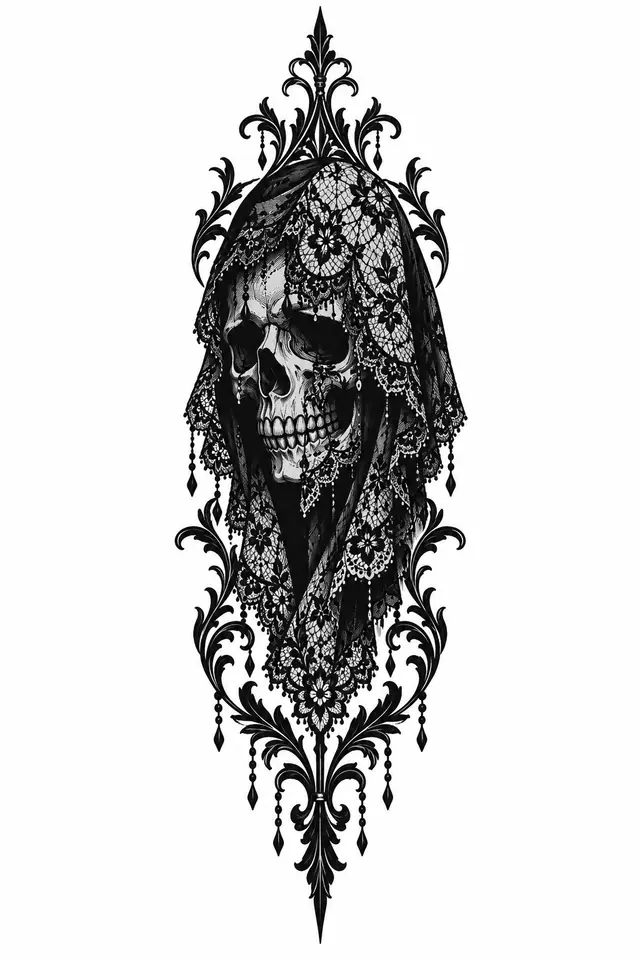 SkullMortality worn openly: the oldest reminder that life is short.
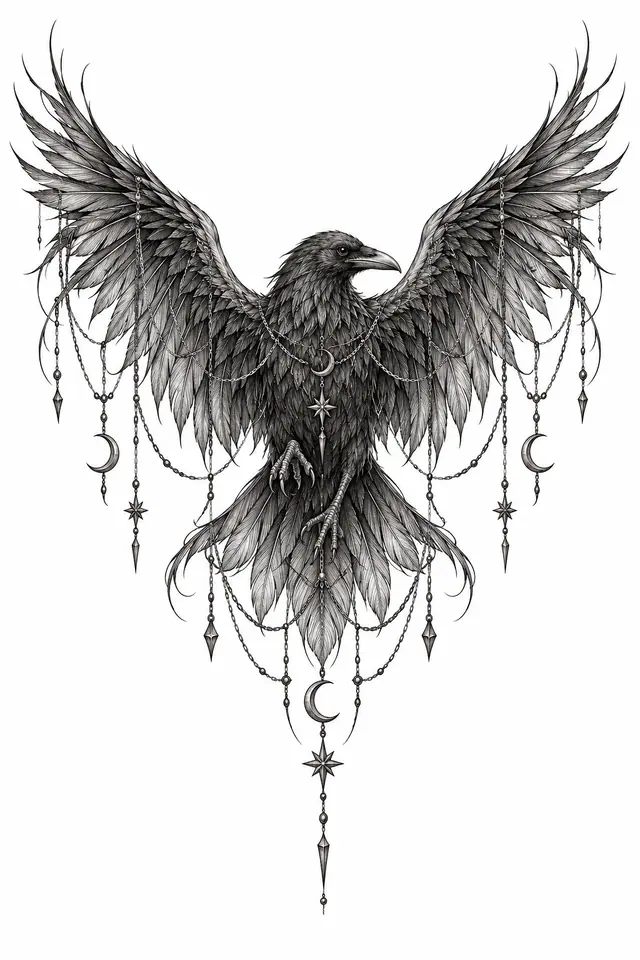 Raven and crowPoe's messenger, read as omen, memory and intelligence.
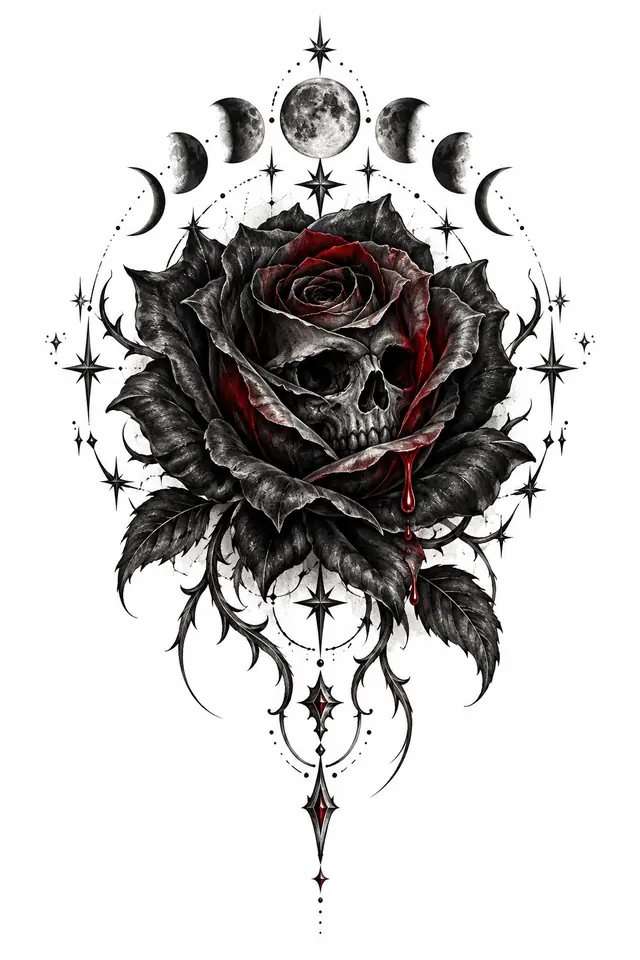 Black roseLove that outlives loss, grief and farewells.
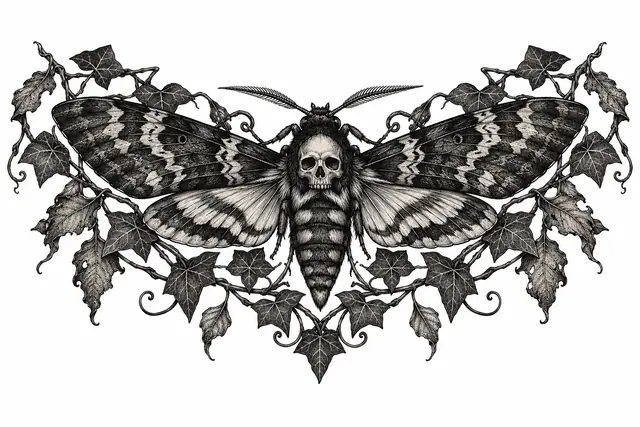 MothDrawn to the flame: transformation, night and the soul.
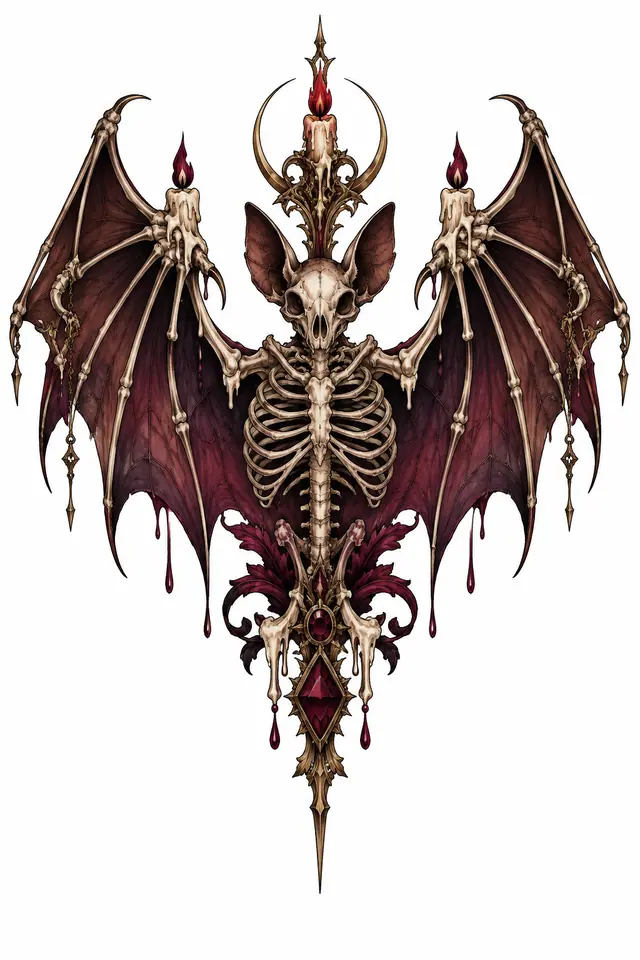 BatCreature of the night, linked with rebirth and Dracula.
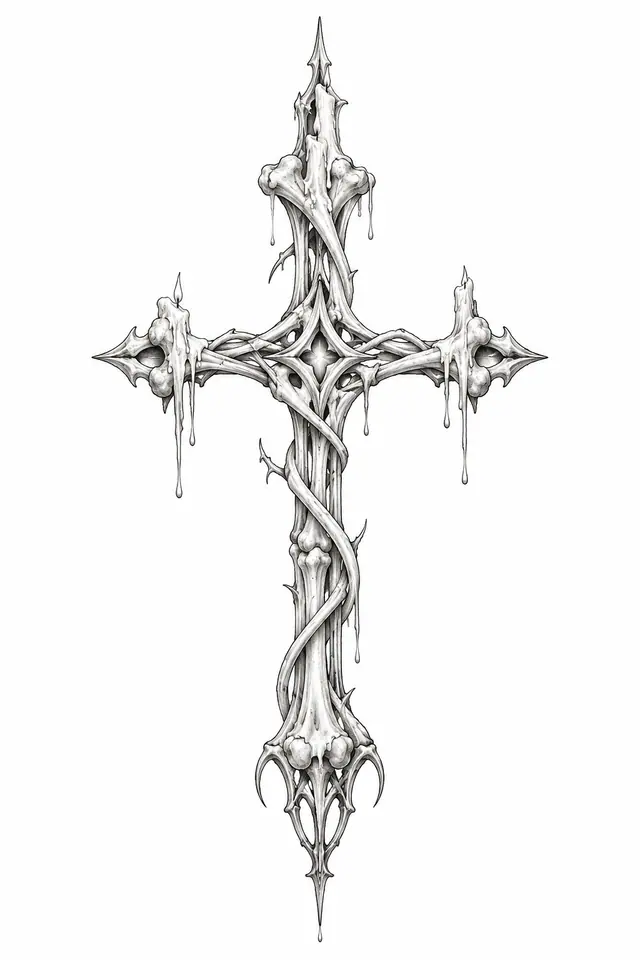 Gothic crossFaith in stone and thorns, from churchyards to chains.
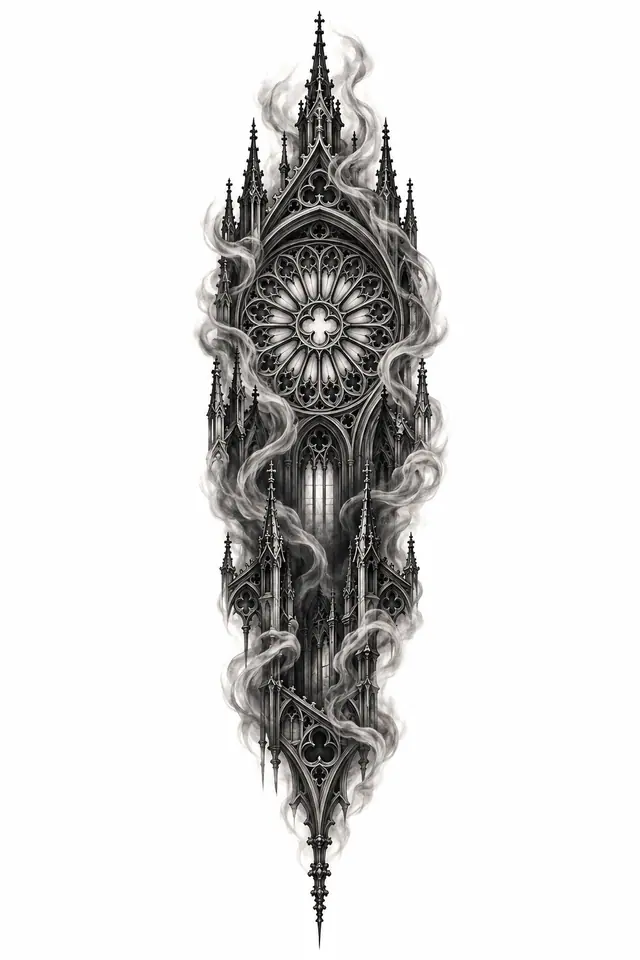 CathedralPointed arches and rose windows from 12th-century France.
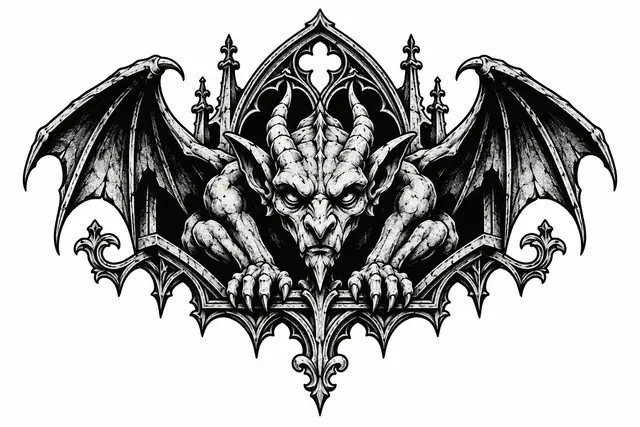 GargoyleStone guardians that kept rain and evil off the roof.
 VampireRomance and hunger, from Victorian novels to now.